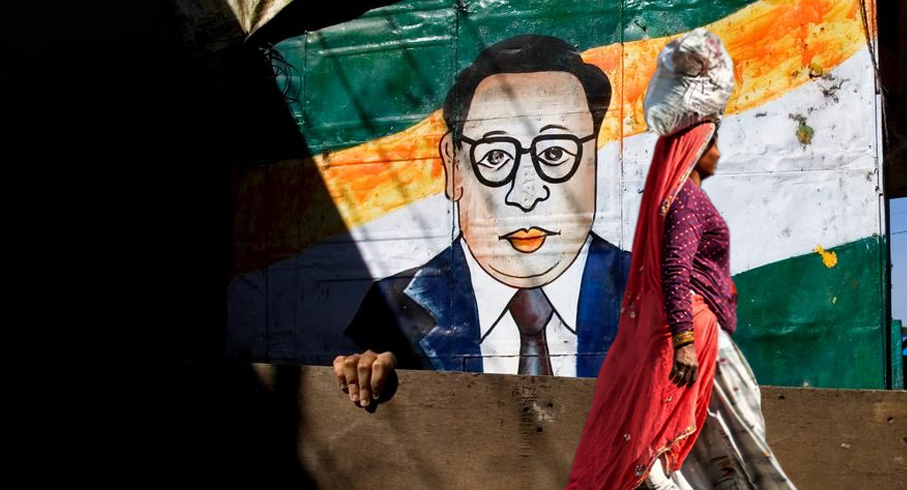
An investigative political-economic analysis of Dalit labour, entrepreneurship, capital ownership and corporate participation in India.
India’s economic growth story is often told through the language of expanding markets, rising investment, technological innovation and the emergence of a powerful middle class. Cities are presented as engines of opportunity, and entrepreneurship as the great equaliser. Yet beneath this narrative of progress lies a deeply unequal economic structure in which caste continues to influence who owns capital, who controls businesses, who receives secure employment, who performs hazardous work and whose labour remains undervalued. The Indian economy may have modernised its technologies, expanded its corporate institutions and transformed its consumption patterns, but the social foundations of economic power have not changed at the same pace. Caste has not disappeared from the marketplace; it has adapted to it.
The persistence of caste in the economy cannot be understood simply as a question of social discrimination or individual prejudice. It is a system of economic organisation that shapes access to productive resources, occupational opportunities, property, credit, markets and professional networks. Its influence is visible not only in villages and traditional occupations but also in factories, corporate offices, construction sites, municipal services, technology industries and the rapidly expanding urban informal economy. The central contradiction of Indian development is that an economy capable of producing global corporations and technological innovation continues to depend on deeply unequal arrangements of labour and social status.
The concentration of Dalit communities in what are commonly described as 3D occupations—Dirty, Dangerous and Demeaning—reveals the enduring relationship between caste and the division of labour. Sanitation, manual waste handling, sewer cleaning, leather processing, certain forms of construction work and other hazardous occupations continue to expose workers to physical danger, social humiliation and economic insecurity. These are not merely low-paid jobs. They are occupations in which the risks are disproportionately transferred to workers who have the least bargaining power and the weakest protection. The problem is not that particular communities are naturally associated with particular forms of work. It is that historical exclusion, unequal ownership and institutional discrimination have repeatedly restricted their ability to move out of these occupations.
Urban India provides some of the clearest illustrations of this contradiction. Chennai, Hyderabad, Bengaluru and Ahmedabad are frequently celebrated as centres of industrial expansion, technological advancement, infrastructure development and investment. Their skylines reflect the ambitions of a modernising economy. But the workers who construct, maintain and clean these cities often remain outside the prosperity that urban growth generates. In Chennai, the relationship between urban redevelopment, informal settlements and insecure labour raises fundamental questions about who benefits from the transformation of the city and who bears its social and economic costs. The expansion of infrastructure and commercial development does not automatically translate into equal access to secure housing, decent employment or economic opportunity for marginalised communities.
In Hyderabad, the growth of information technology, pharmaceuticals, real estate and large-scale infrastructure has created new centres of wealth and employment. Yet the presence of high-value industries does not, by itself, dismantle older patterns of occupational hierarchy. The city’s modern economy continues to depend on construction workers, sanitation workers, domestic workers, transport workers and other informal labourers whose employment is frequently insecure and whose contribution remains largely invisible in the language of development. Bengaluru presents a similar contradiction. As one of India’s most prominent technology and innovation centres, it represents the aspirations of a new economy. But the city’s technological prosperity rests alongside a vast workforce engaged in construction, waste management, domestic service, delivery, maintenance and other forms of precarious labour. The contrast between highly paid technology professionals and workers who sustain the everyday functioning of the city exposes the limits of describing urban modernisation as social transformation.
Ahmedabad offers another important perspective. Its industrial and commercial history, textile economy, manufacturing networks and expanding urban infrastructure reveal how the transition from traditional industry to new forms of business does not necessarily erase inherited inequalities. Workers in informal manufacturing, sanitation, construction and service occupations often remain vulnerable to low wages, insecure contracts and limited social protection. Across these cities, the issue is not that urban economies are identical or that every occupational disadvantage can be attributed exclusively to caste. It is that caste continues to intersect with class, migration, gender and informality, influencing who has access to the benefits of urban development and who remains confined to its most insecure forms of labour.
This pattern also exposes the limitations of treating poverty as the only explanation for occupational inequality. Poverty can push people into insecure work, but caste determines much more than income. It shapes social networks, access to opportunities, the treatment workers receive, the credibility granted to entrepreneurs and the likelihood of entering occupations historically associated with privilege. Two individuals with similar educational qualifications may not encounter the same labour market. Two entrepreneurs with comparable business ideas may not receive equal access to finance, institutional support or commercial networks. Economic competition is often described as an open contest in which the most capable succeed. In reality, the starting points are profoundly unequal.
Dalit entrepreneurship is therefore an important site of both resistance and economic transformation. The emergence of Dalit-owned enterprises challenges the historical assumption that ownership, investment and business leadership belong primarily to socially dominant communities. It represents an attempt to move from being confined to the position of labour to becoming owners of productive assets, employers, suppliers and participants in decision-making. But celebrating individual success stories without examining the structural barriers surrounding them risks turning a question of economic justice into a story of personal determination.
Access to capital remains one of the most significant obstacles. Entrepreneurs from historically marginalised communities may face difficulties in securing loans, collateral, institutional credit, investment and business partnerships. Their access to established commercial networks may also be limited. The problem is not simply the availability of entrepreneurial talent or business ideas. It is the unequal distribution of the resources that allow an idea to become a viable enterprise. A business cannot grow through motivation alone. It requires finance, infrastructure, technology, market access, skilled workers, institutional trust and the ability to withstand periods of financial uncertainty. When these resources are unevenly distributed, the language of equal opportunity conceals the operation of inherited advantage.
The distinction between caste and class is particularly important here. Class determines one’s position in the economic hierarchy, but caste can influence the routes through which that position is acquired, reproduced and protected. A Dalit entrepreneur who manages to establish a business may still encounter barriers in accessing supply chains, commercial associations, institutional finance and business partnerships. Economic success does not automatically dissolve social prejudice. The ability to enter a market is not the same as the ability to compete on equal terms. The real measure of economic inclusion is not the number of individuals who manage to overcome discrimination through exceptional effort, but whether the institutional conditions that reproduce discrimination are being dismantled.
Corporate India must therefore be examined not merely as an engine of growth but as an institution exercising considerable social and economic power. Companies influence recruitment, wages, promotion, leadership, procurement, contracting and the distribution of business opportunities. Their decisions shape the economic futures of millions of people. Yet corporate responsibility is frequently reduced to charitable activities, philanthropic donations, environmental initiatives and public declarations of diversity. These measures cannot substitute for accountability within the organisation’s own economic practices.
The question of representation in corporate leadership is not simply about symbolic visibility. It concerns who participates in decisions about investment, employment, wages, procurement and the distribution of economic value. When marginalised communities remain underrepresented in senior management, ownership and strategic decision-making, the corporate economy reproduces a narrow distribution of power even while presenting itself as meritocratic. Diversity cannot be measured only by the number of people entering the lower levels of an organisation. It must also be assessed by their access to promotion, authority, professional security and leadership.
Corporate accountability must extend beyond direct employees. Large companies frequently operate through contractors, subcontractors, suppliers and layers of outsourced labour. This arrangement can create a distance between corporate profitability and the conditions under which work is performed. A company may maintain a formal policy on human rights while workers employed through its contractors experience low wages, unsafe working conditions, delayed payments or social discrimination. Responsibility cannot end at the boundary of the company’s payroll. If a business benefits from a supply chain, it must also take responsibility for the labour conditions that sustain that chain. Human rights commitments must be reflected in procurement practices, contract monitoring, grievance mechanisms, occupational safety and the treatment of workers throughout the production process.
The position of Dalit women demands particular attention. They experience the combined effects of caste, gender and class in the labour market. Their work is often concentrated in low-paid and insecure occupations, while their access to land, property, finance, education and independent business ownership remains constrained by multiple forms of exclusion. Even when they enter paid employment, the burden of unpaid domestic and care work frequently limits their economic mobility. Any discussion of Dalit entrepreneurship or labour rights that ignores the specific conditions of women risks reproducing another form of invisibility. Economic empowerment must involve not only employment but also control over income, assets, working conditions and decision-making.
The contradictions visible in Chennai, Hyderabad, Bengaluru and Ahmedabad are equally relevant to the development debate in Kerala. Kerala’s achievements in education, public health and social development have often been presented as evidence of a more egalitarian social order. Yet social development indicators alone cannot establish the existence of economic equality. Unequal access to land, property, secure employment, entrepreneurship and urban resources continues to shape the lives of marginalised communities. The question is not whether Kerala has achieved important social progress, but whether that progress has been translated into an equal distribution of economic power. A society may achieve high levels of literacy and health while leaving ownership, capital and control over productive resources concentrated in relatively privileged sections.
The experiences of these cities also challenge the assumption that urbanisation automatically weakens caste. Cities may create new forms of employment and social interaction, but they can also reproduce exclusion through residential segregation, informal recruitment networks, insecure contracts and unequal access to public services. The language of modernisation can conceal the persistence of old hierarchies in new institutional forms. Caste does not always announce itself openly in the contemporary labour market. It can operate through apparently neutral decisions about hiring, suitability, trust, social connections, creditworthiness and business credibility. Its power lies partly in its ability to function without being explicitly named.
The constitutional promise of equality cannot be realised through social inclusion programmes alone if the economic foundations of inequality remain untouched. Representation, reservation, labour protection and anti-discrimination measures are essential, but they must be accompanied by a broader transformation in the distribution of productive resources. Access to affordable credit, public procurement opportunities, business infrastructure, land, technology, education and secure employment must become central components of economic justice. Dalit-owned enterprises should not be treated as isolated examples of social advancement; they must be recognised as an important part of a more democratic economic structure.
India’s corporate sector must also move beyond the assumption that economic efficiency and social justice are separate concerns. A business model that depends on insecure labour, unequal bargaining power and the exclusion of entire communities may generate profit, but it cannot claim to represent inclusive development. The real test of corporate responsibility is not the language used in annual reports or the scale of philanthropic expenditure. It is whether workers are treated with dignity, whether opportunities are distributed fairly, whether supply chains respect human rights and whether ownership and leadership become more representative of the society from which businesses derive their resources and profits.
The challenge before India is therefore larger than improving the conditions of a particular category of workers or increasing the number of marginalised entrepreneurs. It is to confront the historical concentration of economic power and the institutions that continue to reproduce it. The future of Indian development cannot be measured only through GDP growth, investment figures, new infrastructure or the expansion of technology companies. It must also be measured by who owns the economy, who performs its most dangerous work, who receives its rewards and who has the power to shape its future.
An economy that pursues profit alone may achieve growth. But an economy that fails to guarantee human dignity, equal opportunity and a fair distribution of economic power can never achieve justice.